Academic summaries and oral presentations are essential skills for effectively communicating complex scientific arguments and research findings.
Üyeler sınırsız test çözer, dersi dinler, Bir'e Bir ders alır ve ilerlemesini görür. Üye olmadan 20 dakika deneyebilirsin.
Preparing to Write an Academic Summary

Before writing an academic summary, it is important to understand the original text thoroughly. Students should identify the main ideas, key arguments, and supporting evidence. This preparation helps in condensing the information without losing essential meaning.
Effective preparation also involves note-taking and organizing thoughts logically. Students can use outlines or concept maps to visualize the structure of the summary, ensuring clarity and coherence in their writing.
Örnek
For example, when summarizing a research article on climate change, a student might highlight the causes, effects, and proposed solutions, then organize these points into a concise paragraph that captures the essence of the study.
Exchanging Ideas for Academic Presentations

Collaborative discussions allow students to refine their presentation topics and approaches. By exchanging ideas, they can identify gaps in their arguments and receive constructive feedback. This interaction encourages diverse perspectives and deeper understanding.
Peer feedback also helps in improving language use and presentation style. Students learn to anticipate audience questions and adjust their content accordingly, making their presentations more engaging and effective.
Örnek
For instance, a student presenting on renewable energy might receive suggestions to include recent statistics or to simplify technical terms for better audience understanding.
Brainstorming to Enhance Academic Presentation Skills

Brainstorming sessions encourage creative thinking and help students generate diverse ideas for their presentations. Techniques such as mind mapping and free writing enable them to explore different angles and organize their content effectively.
This process also aids in identifying the most compelling arguments and supporting evidence. By collaborating, students can combine their strengths and create a more persuasive presentation.
Örnek
During a brainstorming session on artificial intelligence, students might list ethical concerns, technological advancements, and future applications, then decide which points to emphasize in their talk.
Developing Oral Presentation Skills through Workshops
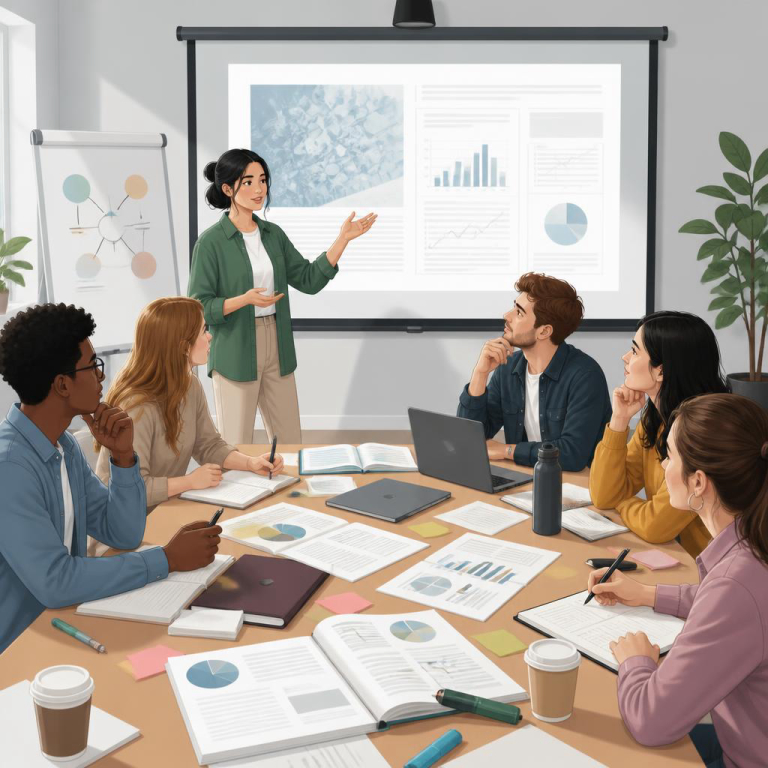
Workshops provide practical opportunities to practice public speaking, focusing on pronunciation, intonation, and body language. Students receive immediate feedback, helping them build confidence and reduce anxiety.
Role-playing and simulated presentations are common activities that mimic real-life scenarios. These exercises help students learn to manage time effectively and engage their audience through eye contact and clear articulation.
Örnek
For example, a student might practice presenting a scientific hypothesis and receive tips on how to emphasize key points and handle audience questions.
Collaborative Information Synthesis for Academic Presentations
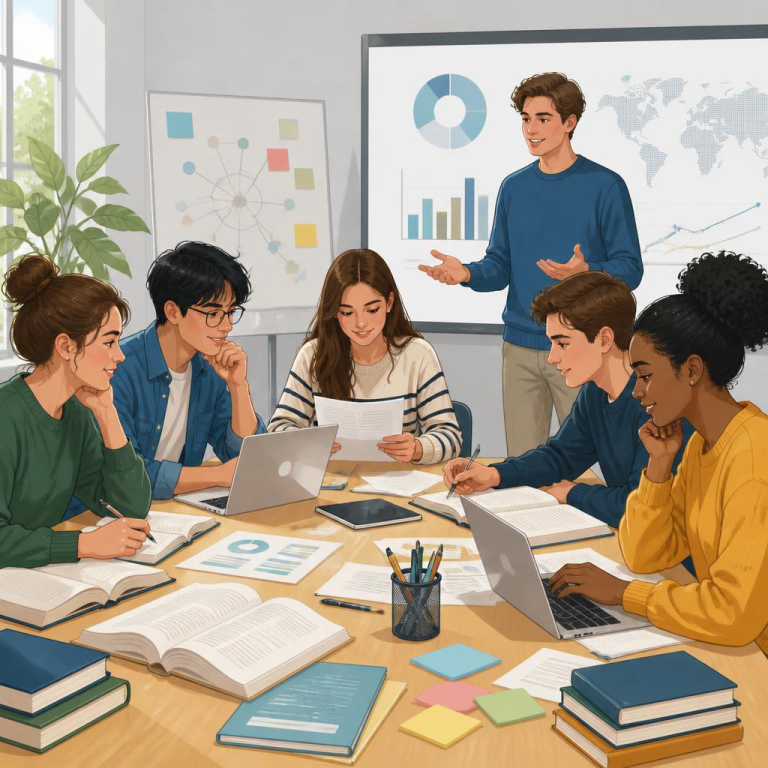
Group work allows students to pool their research and insights, creating a comprehensive presentation. Synthesizing information involves summarizing data, comparing viewpoints, and integrating various sources coherently.
Effective collaboration requires clear communication and division of tasks. Each member contributes their expertise, ensuring the final presentation is well-rounded and supported by evidence.
Örnek
In a group presentation on renewable energy, one student might focus on solar power, another on wind energy, and together they combine their findings to present a balanced overview.
Sık yapılan yanlışlar
- Yanlış: Summaries should include all details from the original text. Doğrusu: Summaries must focus on main ideas and essential information, omitting minor details.
- Yanlış: Oral presentations should be read verbatim from notes. Doğrusu: Presentations are more effective when spoken naturally, using notes as prompts rather than scripts.
- Yanlış: Using complex vocabulary always makes academic writing better. Doğrusu: Clarity and precision are more important than complexity in academic writing.
- Yanlış: Group work means one person does all the research and writing. Doğrusu: Effective group work involves equal participation and collaboration among members.
- Yanlış: Feedback from peers is not necessary if the teacher approves the work. Doğrusu: Peer feedback provides valuable perspectives that can improve the quality of work beyond teacher evaluation.
Bir adım ileri
In higher levels, students learn to write full academic papers and deliver professional conference presentations. They develop skills in critical analysis, argumentation, and using academic conventions such as citations and referencing. Additionally, they practice responding to challenging questions and engaging in academic debates.
Özet
Academic summaries and oral presentations are key to communicating research effectively. Preparing thoroughly, exchanging ideas, brainstorming, practicing speaking skills, and collaborating enhance these abilities. Avoiding common misconceptions ensures clarity and confidence in academic discourse.