Pragmatic failures in conversation arise when speakers misinterpret or misuse language in social contexts, leading to misunderstandings beyond mere vocabulary or grammar errors.
Üyeler sınırsız test çözer, dersi dinler, Bir'e Bir ders alır ve ilerlemesini görür. Üye olmadan 20 dakika deneyebilirsin.
Understanding Pragmatic Failure

Pragmatic failure occurs when a listener interprets an utterance differently from what the speaker intended due to differences in social norms, context, or cultural background. Unlike grammar mistakes, these failures relate to how language is used rather than its structure.
For example, a direct request in one culture might be seen as rude in another, causing confusion or offense. Recognizing pragmatic failure helps learners improve their communication beyond just vocabulary and grammar.
Örnek
Imagine a student says, "Can you open the window?" in a classroom. A pragmatic failure happens if the listener replies literally, "Yes, I can," but does not open the window, missing the implied request.
Types of Pragmatic Failures

Pragmatic failures can be grouped into types such as using inappropriate speech acts, misunderstanding implied meanings (implicatures), or misreading politeness strategies. Each type affects how messages are understood and responded to.
For example, failing to recognize an indirect request or sarcasm can lead to wrong responses. Understanding these types helps learners adjust their language according to social context.
Örnek
When someone says, "It's cold in here," they might be indirectly asking to close a window. A pragmatic failure occurs if the listener ignores this and does not act.
Role-Playing to Practice Pragmatic Competence
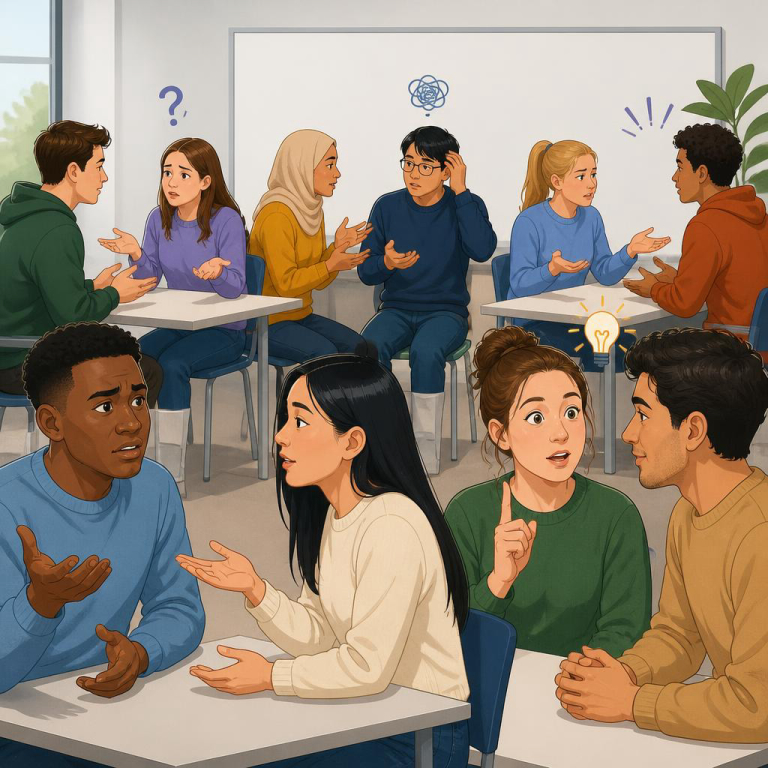
Role-playing offers a safe space to practice real-life conversations where pragmatic rules apply. Students can try different speech acts and get immediate feedback on their pragmatic choices.
Through practice, learners become more aware of context, tone, and cultural expectations, which are important to avoid misunderstandings in real communication.
Örnek
In a role-play, a student might practice apologizing politely after interrupting someone, learning how to say it properly to avoid offending the listener.
Cultural Differences and Pragmatic Failure

Cultural norms strongly influence pragmatic competence. What is polite, humorous, or appropriate in one culture may be different in another. This often causes pragmatic failures in intercultural communication.
For example, some cultures use indirect language to show politeness, while others prefer directness. Understanding these differences helps avoid misunderstandings and builds better intercultural relationships.
Örnek
In Japan, saying "It might be difficult" can mean a polite refusal, while in the US, this phrase might be understood as a tentative agreement. Misunderstanding this can cause confusion.
Role-Play on Cultural Misunderstandings

This role-play shows how cultural differences in communication styles can cause misunderstandings. Students act out situations where a phrase or gesture is interpreted differently because of cultural background.
By experiencing these situations, learners develop empathy and strategies to clarify meaning, such as asking for explanation or describing cultural differences.
Örnek
In the role-play, a student from a direct-speaking culture might say, "Give me the report," which could sound rude to someone from a culture that values indirectness. Recognizing this helps adjust language use.
Sık yapılan yanlışlar
- Yanlış: Pragmatic failure is just about not knowing enough vocabulary or grammar. Doğrusu: Pragmatic failure involves misunderstanding the social use of language, not just vocabulary or grammar mistakes.
- Yanlış: Being polite always means using formal language. Doğrusu: Politeness depends on context and culture; sometimes informal language can be polite if used properly.
- Yanlış: Direct requests are always better than indirect ones. Doğrusu: Whether to use direct or indirect requests depends on social norms and the relationship between speakers.
- Yanlış: Pragmatic competence is less important than grammar for effective communication. Doğrusu: Pragmatic competence is equally important because it governs how messages are understood in context.
- Yanlış: If someone doesn’t understand you, it’s always their fault. Doğrusu: Communication is a shared responsibility; speakers should also adapt their language to the listener’s cultural and language background.
Bir adım ileri
At a higher level, learners study intercultural pragmatics more deeply, exploring how global English varieties affect pragmatic norms. They analyze real conversations, develop strategies to fix misunderstandings, and learn to negotiate meaning in complex social situations, preparing them for real-world multilingual communication.
Özet
Pragmatic failure happens when language is misused in social contexts, causing misunderstandings beyond grammar and vocabulary. Understanding types of pragmatic failures and cultural differences improves communication. Role-playing and awareness of cultural norms are key strategies to develop pragmatic competence.