Improvisation in storytelling and language play enhances creativity and spontaneity in foreign language use.
Üyeler sınırsız test çözer, dersi dinler, Bir'e Bir ders alır ve ilerlemesini görür. Üye olmadan 20 dakika deneyebilirsin.
Introduction to Improvisational Storytelling
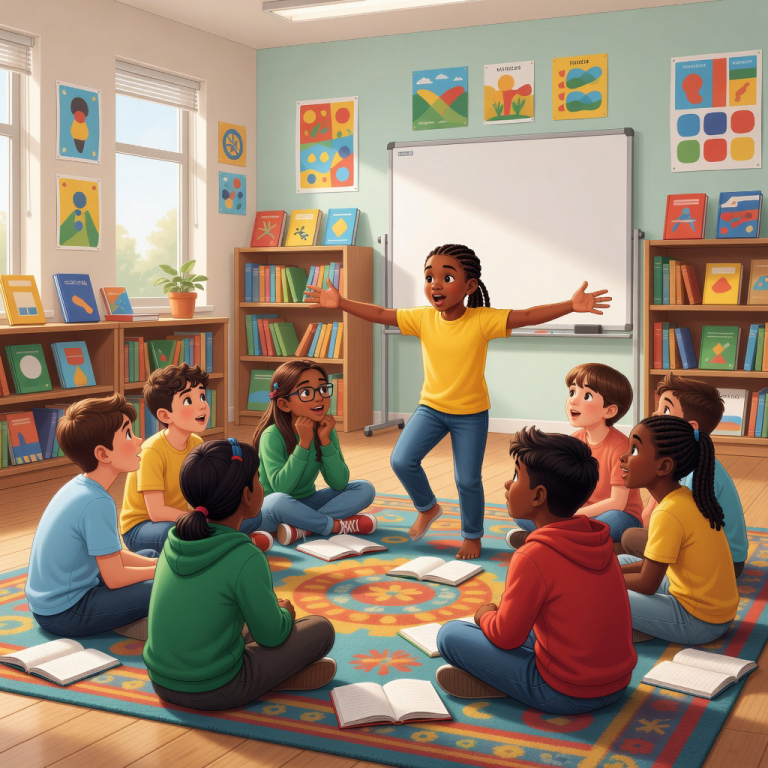
Improvisational storytelling involves creating a narrative on the spot without a fixed script. This technique is widely used in language classrooms to boost learners’ spontaneous speaking skills. By telling stories without preparation, students practice thinking quickly and using diverse vocabulary.
In the classroom setting, the teacher often prompts students with a starting sentence or theme, encouraging them to build the story collectively. This method reduces anxiety about making mistakes, as the focus is on creativity rather than accuracy.
Örnek
Example: The teacher starts with the sentence “Once upon a time, in a mysterious forest...” and each student adds a sentence to continue the story, adapting to unexpected twists introduced by peers.
Language Play through Sudden Object Changes

One common improvisation technique is the sudden change of objects or settings within a story. This creates playful language challenges and encourages learners to think flexibly. For example, a chair might suddenly become a flying carpet, requiring new descriptive vocabulary and imaginative sentences.
This method helps students explore metaphorical language and idiomatic expressions, enriching their linguistic repertoire. It also introduces humor and surprise, which can increase motivation and engagement.
Örnek
Example: A student says, “The chair turned into a magic carpet,” and the next student continues, “It flew over the mountains, sparkling under the moonlight.”
Combining Word and Idiom Fragments
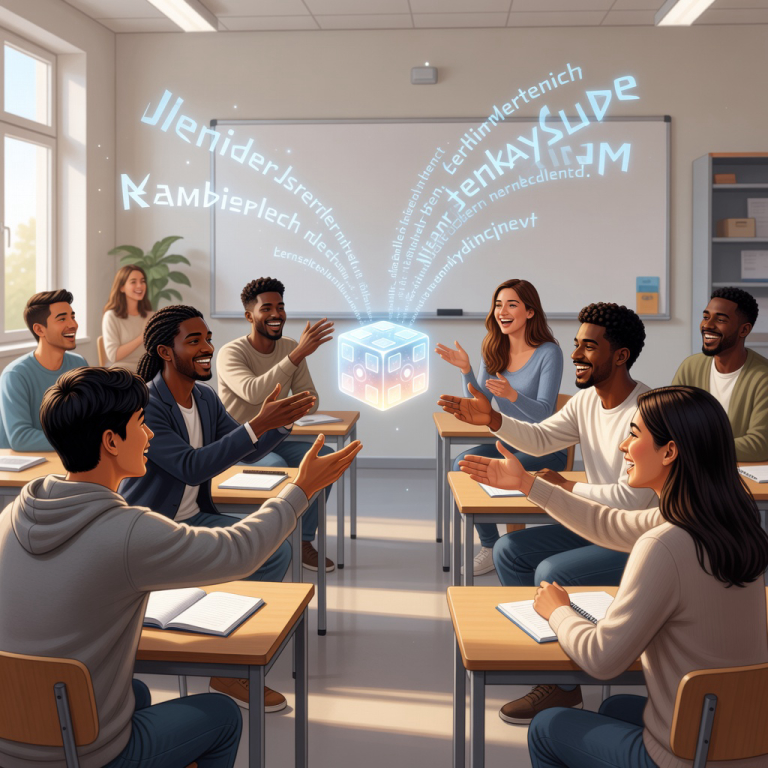
Improvisation can also involve piecing together parts of words or idioms to form novel expressions. This practice stimulates creative thinking and deepens understanding of language structure. For example, combining “auf den Punkt” (to the point) with “bringen” (to bring) creates the idiom “auf den Punkt bringen” (to get to the point).
By experimenting with fragments, learners discover how idioms and collocations function, which is crucial for mastering advanced language levels like C2.
Örnek
Example: Students receive word cards with parts of idioms and try to assemble correct or playful new idioms, such as “den Nagel auf den Kopf treffen” (to hit the nail on the head).
Instant Sentence Changes with Word Cards
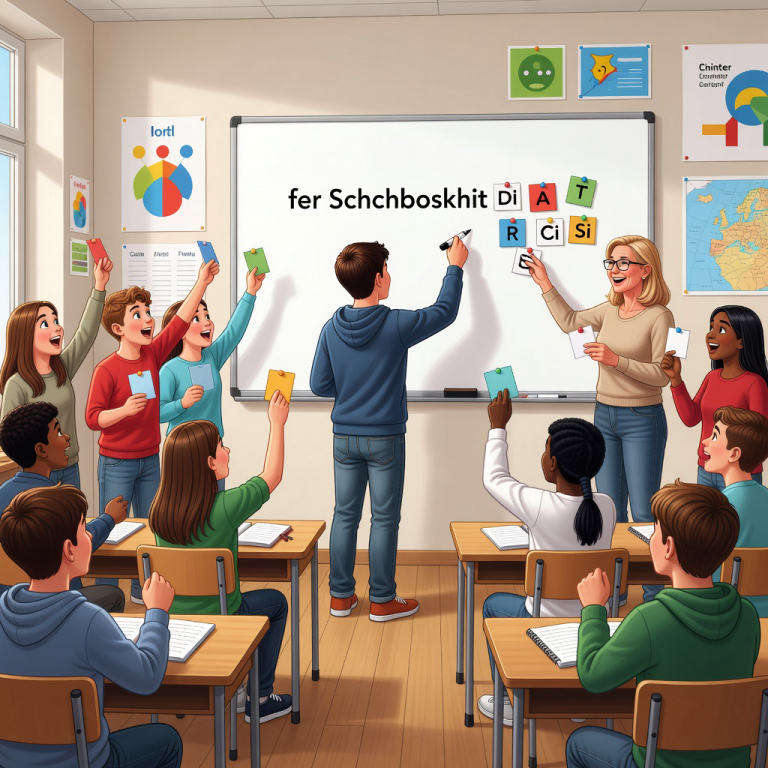
Using word cards to alter sentences instantly is a dynamic way to practice language flexibility. By swapping nouns, verbs, or adjectives, students see how sentence meaning shifts. This activity sharpens grammatical awareness and vocabulary usage.
It also encourages learners to pay attention to syntax and agreement, as changing one word often requires adjusting others to maintain grammatical correctness.
Örnek
Example: The sentence “Der Hund läuft schnell” (The dog runs fast) can be changed to “Die Katze schläft ruhig” (The cat sleeps quietly) by replacing the subject, verb, and adverb cards.
Creating New Sentences from Word Parts
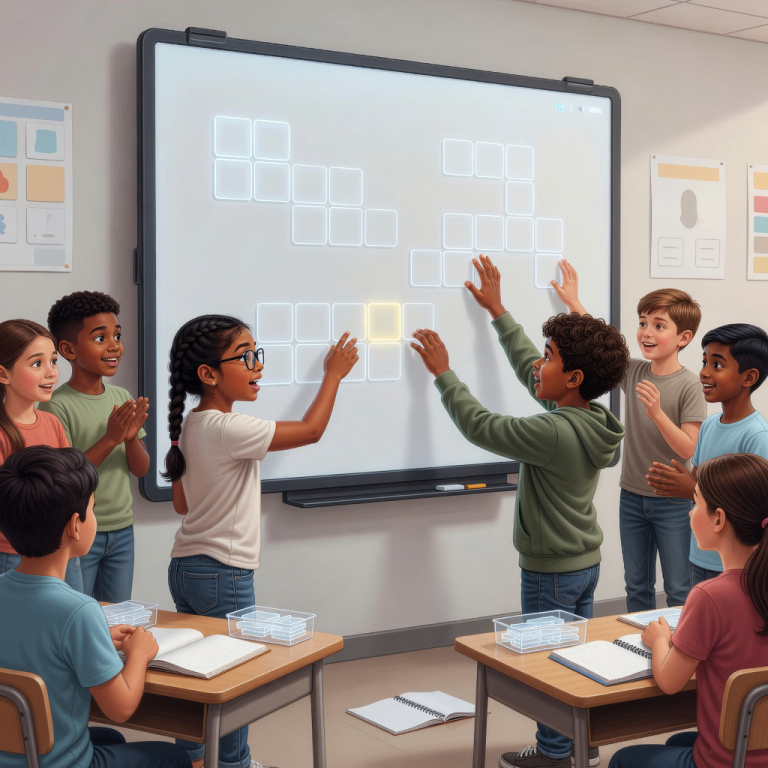
Another improvisation technique involves combining word parts—prefixes, roots, and suffixes—to invent new words or sentences. This deepens morphological awareness and expands vocabulary creatively. For example, combining “un-” with “möglich” forms “unmöglich” (impossible).
Through this process, students learn to manipulate language components and understand word formation rules, which supports advanced language proficiency.
Örnek
Example: Students receive parts like “ver-”, “stehen”, and “bar” and create the word “verstehbar” (understandable), then use it in a sentence: “Der Text ist sehr verstehbar.” (The text is very understandable.)
Sık yapılan yanlışlar
- Yanlış: Improvisation means making many mistakes and is not suitable for serious language learning. Doğrusu: Improvisation encourages risk-taking and fluency, which are essential for mastering a language, especially at advanced levels.
- Yanlış: Only native speakers can effectively improvise in a foreign language. Doğrusu: With practice, learners at all levels can develop improvisational skills that improve their spontaneity and confidence.
- Yanlış: Improvisation focuses only on speaking and neglects grammar and vocabulary accuracy. Doğrusu: While fluency is prioritized, improvisation also reinforces grammar and vocabulary through active use and correction.
- Yanlış: Improvisation is chaotic and does not help with structured language learning. Doğrusu: Improvisation complements structured learning by applying knowledge in flexible, real-life contexts.
- Yanlış: Improvisation is only useful for drama or theater classes. Doğrusu: Improvisation benefits all language skills, including speaking, listening, and creative writing, beyond theatrical contexts.
Bir adım ileri
At higher levels, improvisation expands into complex narrative techniques, such as using multiple perspectives, unreliable narrators, and integrating cultural references. Students also explore advanced language play like puns, irony, and intertextuality, enhancing both comprehension and production skills in sophisticated contexts.
Özet
Improvisational storytelling and language play develop learners’ creativity and spontaneity in language use. Techniques like sudden object changes, combining idiom fragments, and instant sentence modifications enrich vocabulary and fluency. Overcoming misconceptions about improvisation helps learners embrace this dynamic approach, preparing them for advanced language mastery.