Reported Speech
Ders videosu
Konu anlatımı
9. Sınıf İngilizce - Reported Speech
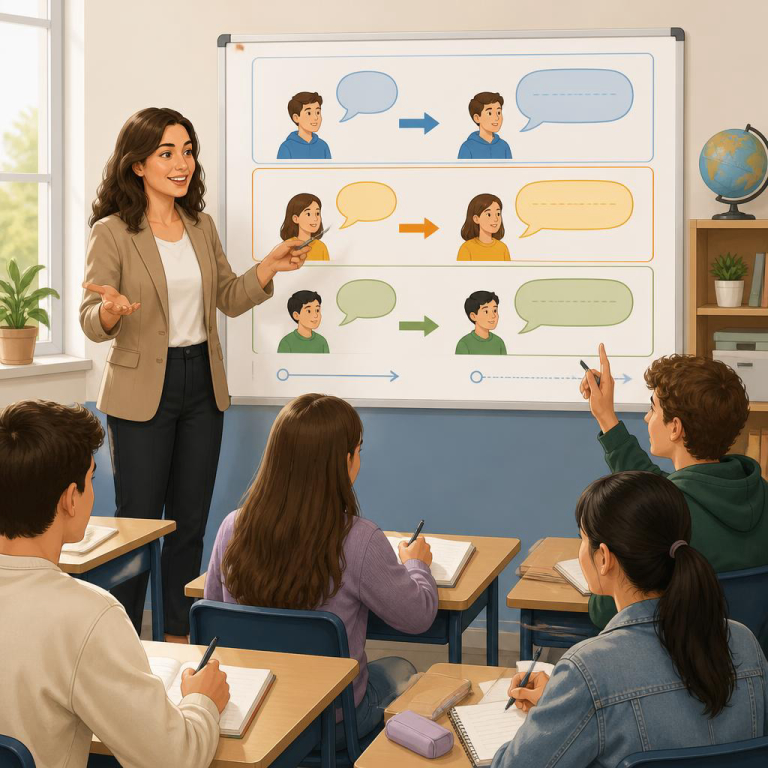
Bu derste ne öğreneceğiz?
Bu derste, "Reported Speech" yani "Dolaylı Anlatım" konusunu öğreneceğiz. Dolaylı anlatım, bir kişinin söylediği sözlerin başka bir kişi tarafından aktarılmasıdır. Bu yapıyı nasıl kullanacağımızı, kurallarını ve örneklerini inceleyeceğiz.
Üyeler sınırsız test çözer, dersi dinler, Bir'e Bir ders alır ve ilerlemesini görür. Üye olmadan 20 dakika deneyebilirsin.
Temel kavramlar
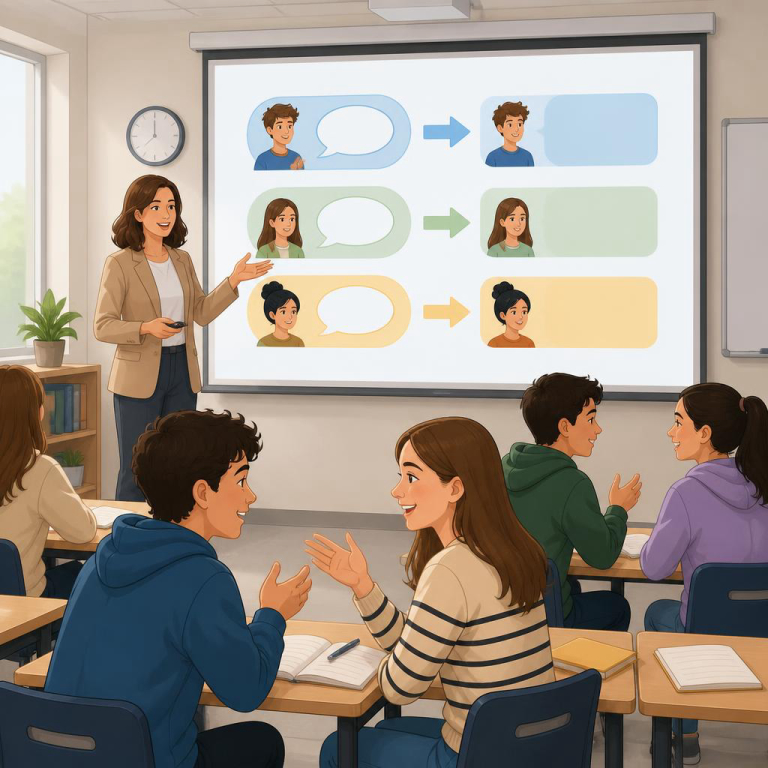
Dolaylı anlatım, bir kişinin doğrudan söylediği sözlerin başka bir kişi tarafından aktarılmasıdır. Örneğin, "I am happy" cümlesi doğrudan konuşma iken, "He said that he was happy" cümlesi dolaylı anlatımdır. Dolaylı anlatımda bazı değişiklikler yapılması gerekmektedir:
- Zaman değişiklikleri: Doğrudan konuşmadaki zaman, dolaylı anlatıma geçerken değişir.
- Şahıs zamirleri: Konuşmanın kimin tarafından yapıldığına göre zamirler değişir.
- Belirli ifadeler: "now" (şimdi) "then" (o zaman) gibi zaman belirteçleri de değişir.
Ayrıntılı anlatım
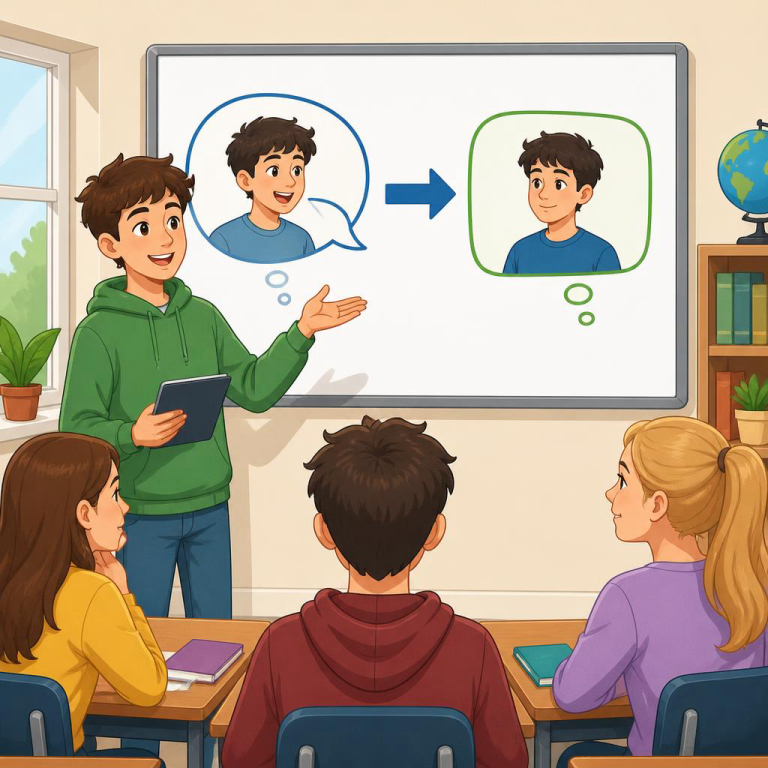
Dolaylı anlatımda, cümle yapısında bazı değişiklikler yapılır. İşte temel kurallar:
- Zaman değişiklikleri:
- Present Simple → Past Simple
- Present Continuous → Past Continuous
- Present Perfect → Past Perfect
- Will → Would
- Şahıs zamirleri değişir:
- I → He/She
- You → He/She
- We → They
- Belirli ifadeler de değişir:
- Now → Then
- Today → That day
- Tomorrow → The next day
Çözümlü örnekler
Şimdi birkaç örnek üzerinden dolaylı anlatımın nasıl yapıldığını inceleyelim:
- Direct Speech: "I am going to the market."
Reported Speech: He said that he was going to the market. - Direct Speech: "She will come tomorrow."
Reported Speech: He said that she would come the next day. - Direct Speech: "They are playing football."
Reported Speech: She said that they were playing football.
Sık yapılan hatalar
Dolaylı anlatımda sık yapılan hatalardan bazıları şunlardır:
- Zaman değişikliklerini yapmamak.
- Şahıs zamirlerini yanlış kullanmak.
- Belirli ifadeleri değiştirmemek.
Uygulama

Aşağıdaki cümleleri dolaylı anlatıma çevirin:
- “I love this book.”
- “They are studying for the exam.”
- “We will go to the cinema.”
- “She has finished her homework.”
- “He said, ‘I am tired.’”
Mini test
Aşağıdaki soruları cevaplayın:
- “I want to eat pizza.” cümlesini dolaylı anlatıma çevirin.
- “She is reading a book.” cümlesini dolaylı anlatıma çevirin.
- “They will travel next week.” cümlesini dolaylı anlatıma çevirin.
- “He said, ‘I am happy.’” cümlesini dolaylı anlatıma çevirin.
- “We are going to the party.” cümlesini dolaylı anlatıma çevirin.
Cevap anahtarı
- He said that he wanted to eat pizza.
- She said that she was reading a book.
- They said that they would travel the following week.
- He said that he was happy.
- They said that they were going to the party.
Özet
Bu derste dolaylı anlatımın ne olduğunu, nasıl kullanıldığını ve kurallarını öğrendik. Dolaylı anlatımda zaman, şahıs zamirleri ve belirli ifadelerin nasıl değiştiğini inceledik. Uygulamalar ve testler ile konuyu pekiştirdik.
Örnek sorular
- He said that he was going to the market.
- He said that he is going to the market.
- He said that he goes to the market.
- He said that he was gone to the market.
Cevabı göster
- She said that she will finish her homework.
- She said that she would finish her homework.
- She said that she finishes her homework.
- She said that she finished her homework.
Cevabı göster
- They said that they are happy.
- They said that they were happy.
- They said that they have been happy.
- They said that they happy.
Cevabı göster
- John said that he can swim.
- John said that he could swim.
- John said that he swims.
- John said that he swam.
Cevabı göster
- Maria said that she is studying for the exam.
- Maria said that she was studying for the exam.
- Maria said that she studies for the exam.
- Maria said that she studied for the exam.